


When to Use Hydrogen Mixed Gas for Orbital Welding


Benefits, Trade-Offs, and When to Use Each
Orbital pipe welding—most commonly performed using automated GTAW (TIG)—is widely used in industries where precision, repeatability, and weld purity are critical, such as semiconductor manufacturing, pharmaceuticals, food processing, and high-purity piping systems.
One of the most important variables influencing weld quality and productivity is the shielding gas composition. While 100% argon remains the baseline standard, argon–hydrogen mixtures (typically 95% Ar / 5% H₂) are frequently used to enhance performance under the right conditions.
This article breaks down the technical benefits, limitations, and application trade-offs between these two gas options.
Understanding the Role of Shielding Gas in Orbital Welding

Shielding gas serves several critical functions in orbital welding:
Protects the weld pool from atmospheric contamination (oxygen, nitrogen, moisture)
Stabilizes the arc
Influences heat input, penetration, and bead profile
Affects surface finish and oxidation levels
Even small changes in gas composition can significantly impact weld outcomes because orbital welding is highly controlled and repeatable.
100% Argon: The Industry Baseline
Key Advantages
1. Excellent Arc Stability
Argon is easy to ionize and provides a smooth, stable arc, making it ideal for automated welding processes.
2. Superior Shielding Protection
Being dense and inert, argon forms a strong protective blanket over the weld pool, minimizing contamination.
3. Broad Material Compatibility
100% argon is suitable for:
Stainless steels
Carbon steels
Aluminum (in TIG applications)
Exotic alloys
4. Reduced Risk of Metallurgical Defects
Because it is inert, argon avoids risks like:
Hydrogen embrittlement
Porosity from reactive gases
5. Preferred for High-Purity Applications
Industries requiring ultra-clean welds (e.g., semiconductor or pharmaceutical piping) often mandate pure argon to prevent any chemical interaction or contamination.
Limitations of 100% Argon
Lower heat input compared to mixed gases
Shallower weld penetration
Slower travel speeds
May require additional passes for thicker materials
95% Argon / 5% Hydrogen: Performance-Enhanced Blend
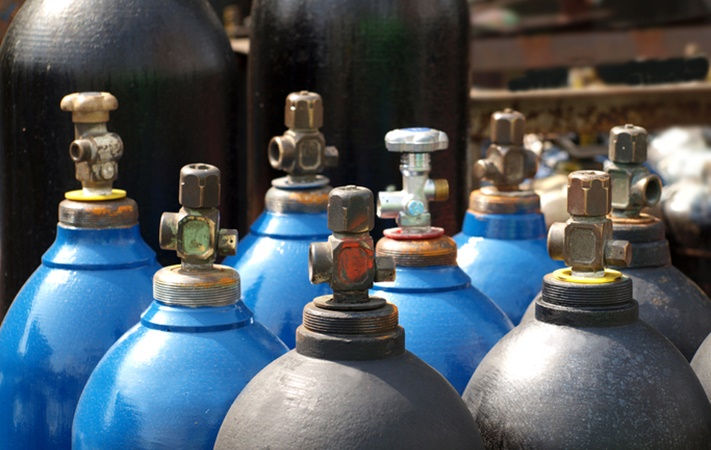
Adding hydrogen to argon fundamentally changes arc characteristics and weld behavior.
Key Benefits
1. Increased Heat Input and Penetration
Hydrogen increases arc energy and thermal conductivity, producing:
Deeper penetration
More efficient fusion
This is especially useful for thicker wall tubing or single-pass welds.
2. Faster Welding Speeds
The hotter, more energetic arc allows:
Higher travel speeds
Reduced cycle times
Improved productivity
This makes the mixture attractive for high-volume orbital welding operations.

3. Improved Surface Finish (Reduced Oxidation)
Hydrogen acts as a reducing agent, removing oxygen from the weld environment and producing:
Bright, shiny welds
Minimal heat tint
Reduced post-weld cleaning
4. Narrower Heat-Affected Zone
A more concentrated arc results in:
Less distortion
Better dimensional control
Cleaner weld profiles
5. Ideal for Austenitic Stainless Steel
Argon-hydrogen blends are particularly effective on:
300-series stainless steels
High-purity tubing systems
Limitations and Risks of Argon-Hydrogen Mixtures
1. Hydrogen Embrittlement Risk
Hydrogen can diffuse into certain metals and cause cracking or embrittlement, especially in:
Carbon steels
Ferritic or martensitic steels
For these materials, hydrogen blends are generally not recommended.
2. Limited Material Compatibility
Hydrogen-containing gases should be avoided for:
Aluminum
Copper alloys
Some exotic alloys
Due to risks of porosity and weld defects.
3. Higher Gas Cost
Mixed gases are typically more expensive than pure argon, though this can be offset by:
Increased productivity
Reduced rework
Lower finishing costs
4. Process Sensitivity
Hydrogen blends require tighter control of:
Parameters (current, speed, gas flow)
Joint preparation
Material cleanliness
Improper use can lead to defects faster than with pure argon.
Side-by-Side Comparison
Factor | 100% Argon | 95% Argon / 5% Hydrogen |
Arc Stability | Excellent | Excellent (more energetic) |
Heat Input | Moderate | High |
Penetration | Moderate | Deep |
Travel Speed | Slower | Faster |
Surface Finish | Good | Excellent (bright, clean) |
Oxidation Control | Good | Superior |
Material Compatibility | Very broad | Limited |
Risk Level | Low | Moderate (hydrogen effects) |
Cost | Lower | Higher (but more productive) |
When to Use Each Gas

Choose 100% Argon When:
Welding carbon steel or mixed materials
Working in high-purity or regulated environments
Maximum reliability and consistency are required
Risk mitigation is more important than speed
Choose 95% Ar / 5% H₂ When:
Welding austenitic stainless steel (e.g., 304/316)
Productivity and speed are critical
You want improved weld appearance and minimal oxidation
Performing single-pass or thicker-wall welds
Practical Insight for Orbital Welding Operations
In real-world orbital welding programs, gas selection is often driven by:
Material specification (WPS/PQR requirements)
Wall thickness
Production volume
Surface finish requirements
Many operations standardize on pure argon for versatility, then switch to argon-hydrogen blends for stainless steel production runs where efficiency gains justify the added complexity.
Conclusion
Both 100% argon and 95% argon / 5% hydrogen have clear roles in orbital pipe welding:
100% Argon offers maximum compatibility, safety, and simplicity
Argon-Hydrogen blends deliver superior performance, speed, and finish—but with tighter constraints
The best choice ultimately depends on balancing:
Material compatibility
Productivity goals
Quality requirements
Risk tolerance
For high-performance stainless steel orbital welding, argon-hydrogen blends can provide a significant competitive advantage—when used correctly.
If you are considering orbital welding for the first time and want honest, expert guidance please reach out to GSI Machinery in Houston Texas. We will listen to understand your application and if we don't have the best solution for what you need to accomplish we will at least point you in the right direction. Our goal is to strengthen American industry by empowering our domestic fabricators to be efficient and cost competitive in today's global economy - meaning we want to see you succeed!
678-387-7885
6815 Easthaven Blvd, Unit B300. Houston TX 77017

